

Okay, so check this out—I’ve been fiddling with browser wallets for years, and something about Rabby kept pulling me back. Wow. At first it was small things: clearer permission prompts, fewer surprise gas spikes. But then a pattern emerged that made me take it seriously.
Rabby is a browser-extension wallet built around multi‑chain convenience and safer in‑page interactions. Seriously? Yep. My instinct said there was less noise and more guardrails; that gut feeling pushed me to dig deeper. On one hand it behaves like other familiar wallets. On the other hand it surfaces behavioral cues and transaction previews that actually help you avoid mistakes, though, of course, nothing is foolproof.
Here’s the thing. Browser wallets live in a risky sweet spot: super convenient, and therefore tempting. Shortcuts matter. Rabby focuses on reducing those shortcuts that lead to lost funds—by separating signing from sending, showing gas insight across chains, and providing a clearer allowance manager. Initially I thought it was feature hype, but then I watched it block a token approval I would’ve blindly accepted. Hmm… that hit home.
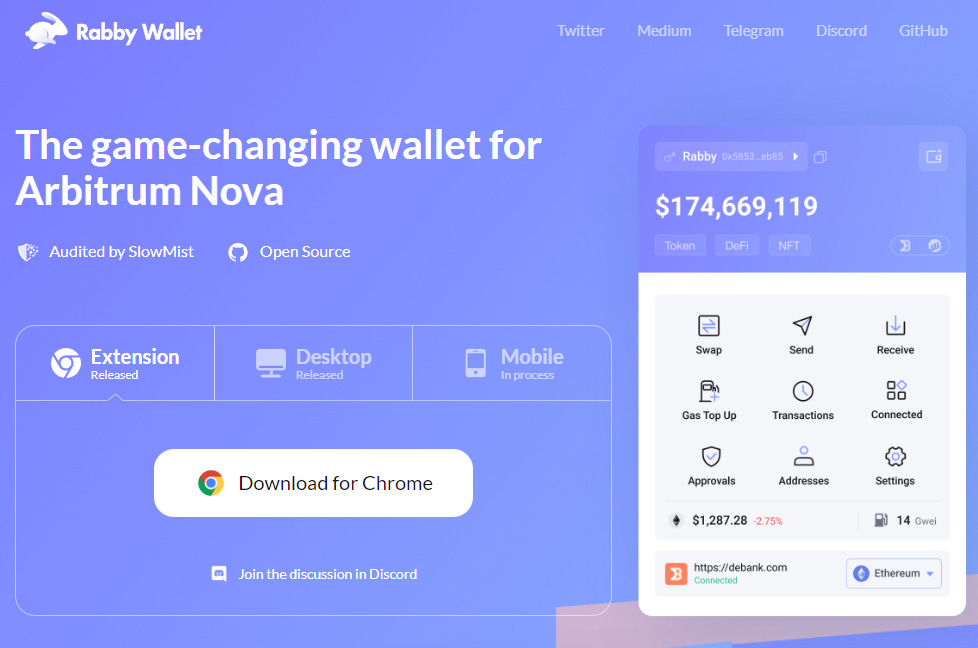
What makes Rabby stand out (and what still bugs me)
First, the positives. Rabby supports many EVM chains and makes switching feel intentional rather than accidental—so you don’t sign on the wrong network. The UI focuses on clarity: transaction details, effective gas cost, and allowance limits are more transparent. That matters when you’re bridging or interacting with complex contracts. I’m biased toward tools that minimize surprises. It shows.
Second, permission control. Rabby gives you an easier way to audit and revoke token approvals. Very very important. I like that it encourages least privilege rather than permanent approvals. On the flip side, some advanced features live behind menus and take a moment to find. Not a dealbreaker, but it bugs me when something useful is buried.
Security-wise, Rabby is a browser extension, so you get the same pros and cons as any extension wallet: local key storage and convenience, but exposure to malicious pages remains a risk. My recommendation is to combine Rabby with hardware wallets when you can—Rabby supports hardware integrations for critical transactions—so you manage risk where it counts. Actually, wait—let me rephrase that: use hardware for high‑value operations, and Rabby for everyday interactions.
How to get Rabby safely
If you want to try it, download only from an official source and verify the extension publisher. Don’t click random links in chats. Here’s a direct place to start: https://sites.google.com/cryptowalletextensionus.com/rabby-wallet-download/ —that page walks you through installation basics.
Quick tips when installing and using any browser wallet:
– Create a new wallet on a secure machine; write down the seed phrase and keep it offline.
– Never paste your seed or private keys into a website.
– Use a hardware wallet for large holdings or important transactions.
– Regularly review token approvals and revoke those you don’t need.
Those seem obvious, but people skip them. I still see it every week—someone trusting a dApp popup too fast. Simple oversight, expensive consequences.
Performance and UX
Rabby feels light. Transactions are quick to preview, and switching networks is mostly smooth. Medium-sized operations like approving allowances or batch transactions are explained with more context than I expected. On some complex DeFi apps it requires an extra click or two. That extra friction can be annoying. Though actually, that friction often prevents regret—so it’s a tradeoff I’m okay with.
There’s also a small but meaningful emphasis on developer ergonomics, which matters if you build dApps or testnets. Rabby tends to play nicely with test networks and custom RPCs, and it exposes debugging info without shouting it from the rooftops. (Oh, and by the way…) it integrates with Ledger and other hardware devices, which I use for anything nontrivial.
Common questions
Is Rabby safe to use for everyday DeFi?
Mostly yes for everyday use if you follow security basics: keep your seed offline, verify extension source, and use hardware for large amounts. Remember that browser extensions inherently carry risk if your browser gets compromised. Balance convenience with the value at stake—small amounts in an extension wallet, large amounts offline or in a hardware wallet.
Can Rabby connect to hardware wallets?
Yes. It supports popular hardware wallets so you can sign high‑value transactions with a device while using the extension UI for less sensitive actions. I use that setup often; it reduces mistakes and keeps my main funds safer.
Does Rabby support multiple chains?
Yes—it’s built to be multi‑chain. It handles numerous EVM-compatible chains, and it exposes gas and network info in ways that reduce accidental network mismatches. That said, always double‑check the target network before confirming transactions.
To wrap up—though I don’t like neat endings—Rabby isn’t perfect, but it’s a pragmatic choice if you want a multi‑chain browser wallet that nudges you toward safer behavior without making everyday use painful. There’s still room for polish and some hidden UX choices that could be clearer. But if convenience plus better safety cues appeal to you, give it a look and pair it with good habits. My experience: fewer surprises, and that’s worth something.